Loads off your maxes, dose off your mileage
Strength is prescribed as a percentage of your actual numbers, with the working weight computed for you - and the weekly dose scales to what your running week is asking of your legs.

Running plans · by coach Quincy L. Harvey
Your first 10K, your first half marathon, a faster race time, or stronger legs for the miles you already run. Each plan sets your training days up front and gives every session a clear job. Printable workbooks with the program in the app, by coach Quincy L. Harvey.
Printable PDF workbooks with the program in the app included. No account needed to buy.
Strength for runners · Base phase
Working weight off your 1RM · RPE 7
Single-leg strength · the stride is one leg at a time
Interference engine
Heavy legs never land the day before your quality run. Log a bigger mileage week and the strength dose adjusts to it.
Printable workbooks · Instant download
The complete program as a printable workbook: every session on its own page with log boxes, an illustrated guide to every exercise, and the program in the app included.
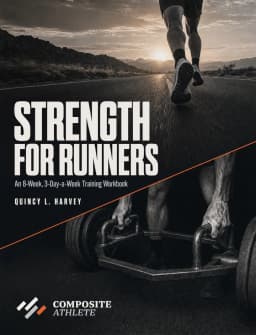
Printable workbook · 8 weeks
An eight-week strength program built for runners, with a log for every session.
$12.99 · PDF + app program →
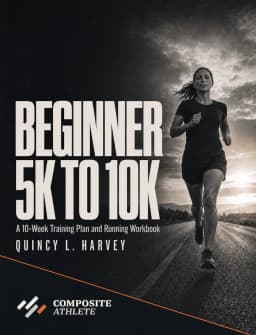
Printable workbook · 10 weeks
A ten-week plan that takes you from running 5K to your first 10K, with a page for every session.
$12.99 · PDF + app program →

Printable workbook · 12 weeks
You signed up for your first half marathon and only have four days a week. This plan gives each of those days a clear job.
$12.99 · PDF + app program →

Printable workbook · 10 weeks
You have run the distance and your race time has stopped improving. This plan gives every run a clear job.
$12.99 · PDF + app program →

Printable workbook · 6 weeks
You finished your marathon and now you are not sure what to do next.
$12.99 · PDF + app program →
Why it’s different
The run plan, and good luck with the rest.
They pace your intervals and build your long run - and leave strength training for runners as a YouTube search. So squats land the day before your tempo run, or never happen at all.
The strength layer, built around your mileage.
A runner-specific strength plan off your real maxes, placed around the running week you’re already doing - or one hybrid plan that programs the lifting and the running together, interference managed, so both actually progress.
What runners actually need
Not a bodybuilding split with ‘runner’ in the title. The specific strength that holds your stride together when the mileage climbs.
Posterior chain
Hinge, glutes, hamstrings - the engine behind every stride, loaded off your real numbers.
Single-leg strength
Running is a single-leg sport. Split squats and step-ups fix the imbalances mileage exposes.
Calves & feet
The tissue that takes the pounding of every stride. Trained, not hoped for.
Trunk & core
Anti-rotation and carries - the form insurance for the last 10K, when your stride wants to fold.
Plyometrics, dosed
Small doses of stiffness and spring for running economy - free speed that easy miles can’t buy.
The rebuild
After the race: rebuild tissue before you chase fitness - the rebuild most runners skip, laid out in Get Back to Running After Your Marathon.
Training guides
Coach-written guides with the actual numbers - standards, loads, pacing, and session prescriptions. No fluff, no locked content.
The complete guide
Strength Training for Runners: The Complete Evidence-Based Guide
What runners should lift, how heavy, where it fits in a run week, and how strength work changes across a marathon block. Coach-written, evidence-based.
13 min read · updated 2026-07-19
Marathon-block strength
How we program it
Strength is prescribed as a percentage of your actual numbers, with the working weight computed for you - and the weekly dose scales to what your running week is asking of your legs.
Hard days hard, easy days easy: heavy lower-body work is kept away from your quality runs, so lifting supports the mileage instead of leaving you flat for the sessions that matter.
Keep your own run plan and add the strength layer around it - or have the running and the lifting programmed as one hybrid plan. Up to four sports, one interference-managed week.
A bigger mileage week, a missed lift, a cranky Achilles - the next block responds to what actually happened. Flag pain and it deloads and alerts your coach, if you have one, rather than pushing through.
Start today
Free is a real strength plan for a runner. Pro adds the adaptive engine - loads off your maxes, the dose fit to your mileage, regenerated from every session - for $19/mo, with your first 21 days free if you're new to Pro. Already work with a coach? Connecting them is free. Prefer a fixed block? Strength for Runners and Get Back to Running After Your Marathon are in the store.